[00:00:27]
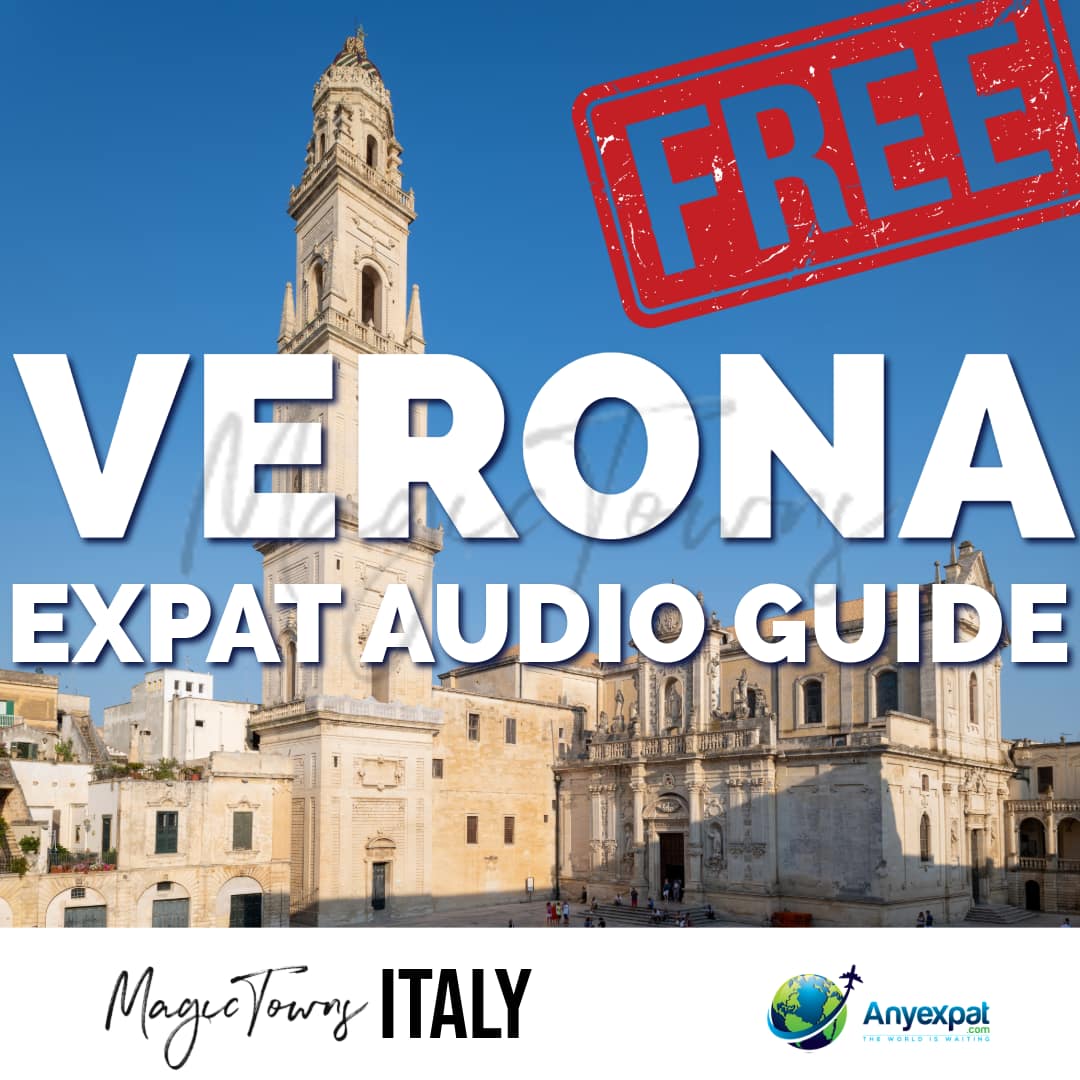
Miles: Welcome to the Magic Towns, Italy audio guide to Verona crafted especially for expats and retirees considering a move to Italy and maybe picturing a place where ancient history whispers on every corner, where culture isn’t just a word, but you know, a way of life, and where the pace feels well, human.
[00:00:52] Let’s really explore that idea. Specifically looking at Verona. Forget the glossy postcards for a moment. This is about getting down to the real questions. If you’re seriously thinking of making this captivating Italian city.
[00:01:05]
Alessia: Your new home. And for this deep dive into
Verona, we’ve gathered information from various places.
[00:01:11] Everything from detailed historical accounts, encyclopedias, to really practical guides, written for expats, people who’ve already made the move. Our aim here is to cut through some of the romanticism , and give you the ground and knowledge you actually need to assess a Verona could be the right fit for your own expat journey.
[00:01:32]
Miles: Okay, so let’s set the scene. Verona sits right at this sweet spot where the northern edge of the Po Valley meets the Adige River. And you’ve got the Lessini Mountains rising up just behind it. Altitude’s about 58, 59 meters above sea level. So not high up.
[00:01:53]
Alessia: Right? Not mountainous itself, but close and, it’s not a sprawling metropolis either.
[00:02:00]
Miles: Just under what, 200 square kilometers?
[00:02:04]
Alessia: And the residents have these great nicknames. They’re called Veronesi or sometimes Scaligeri, which ties back to the city’s history.
[00:02:14] And you mentioned the river, the Adige, that’s more than just scenery, right? Historically, it was the absolute lifeblood of Verona, a crucial waterway for trade, for industry. It was navigable way up to
trento. And can you imagine back in the 19th century, there were apparently hundreds, maybe up to 400 floating mills using its power.
[00:02:40]
Miles: Floating mills. That’s incredible.
[00:02:41]
Alessia: Isn’t it? Of course, this close relationship with the river, it also brought challenges. Most notably, there was a really devastating flood.
[00:02:52]
Miles: Oh dear.
[00:02:52]
Alessia: Yeah. And that ultimately led to the construction of those impressive protective walls, the muraglioni, um, that you still see defining parts of the city’s landscape today. It really shows how the city adapted.
[00:03:08]
Miles: Adapts and endures. And the history here, I mean, it’s practically bursting from the cobblestones, isn’t it?
[00:03:14]
Alessia: It really is. People have lived in this area since the Neolithic times, but it really stepped onto the let’s say the world stage during Roman times. Became a Roman colony way back in 88 BC and then a full-fledged a Roman town with rights 49 BC
[00:03:38]
Miles: And that’s when things like the Arena started being built.
[00:03:41]
Alessia: Key Roman monuments started appearing then and after the Romans, Verona stayed strategically important. It was a key military center under the Ostrogoths. The Lombards, the Carolinians.
[00:03:56]
Miles: But there’s one period that always stands out for Verona, isn’t there? The Scaligeri family.
[00:04:03]
Alessia: Yes. The Dalla Scala or Scaligeri. Um, that was the 13th and 14th centuries and it’s really seen as a time of immense prosperity and cultural flourishing for Verona, a real golden age.
[00:04:20]
Miles: Yeah, it sounds like it. Wasn’t there a connection with Dante?
[00:04:23]
Alessia: Absolutely.
[00:04:24] It was such a significant period that Dante Alighieri actually dedicated the entire Paradise section of his Divine Comedy to Cangrande Della Scala. The entire paradise. Wow.
[00:04:41]
Miles: Yeah. It’s a powerful symbol of Verona’s prestige at the time. And when you walk through the city today, you’re still surrounded by the legacy of that era. Castles, tombs, palaces.
[00:04:53]
Alessia: So after the Scaligeri, what happened then?
[00:04:56]
Miles: Well, Verona saw rule by the Visconti family from Milan for a bit, and then significantly it became part of the Republic of
Venice in 1455, which lasted for centuries.
[00:05:13]
Alessia: Okay, the Venetian influence.
[00:05:15]
Miles: Exactly. Much later, after Napoleon, it became a key part of the Austrian Lombard Venetian Kingdom, and that period left its mark too, especially with significant military fortifications being built.
[00:05:32]
Alessia: The Austrian were big on fortifying.
[00:05:34]
Miles: They were. Then finally, in 1866, Verona became part of the newly unified Kingdom of Italy. A long journey, a very long journey. And we should also mention the impact of World War II bombings, which caused damage and the resilience of the Veronese people in rebuilding their city afterwards.
[00:05:58] It really paints a picture of a city layered with history, constantly adapting. So as you can hear, history isn’t just in museums in Verona, it’s woven into the very fabric of daily life. Now to help you, the listener, envision your own life there we’re going to explore some key areas.
[00:06:20]
Alessia: Okay. What are we covering?
[00:06:22]
Miles: Um, we’ll look at the overall lifestyle and vibe, what it feels like. Then the specific pros and cons for expats. We’ll touch on healthcare, the infrastructure, roads, transport, utilities. We’ll discuss the general quality of life, safety, the local environment, the property market. Of course the climate in a bit more detail.
[00:06:49]
Alessia: And we’ll also think about who Verona might suit best. Right, like retirees, remote workers, families.
[00:06:57]
Miles: We’ll try to address how it might appeal to different expat profiles, based on what we found.
[00:07:04]
Alessia: Alright, let’s dive right in then.
[00:07:06] What’s it actually like to live there day to day?
[00:07:11]
Miles: What consistently comes through is this feeling of a genuinely beautiful historic city that somehow manages to offer really high quality of life.
[00:07:26]
Alessia: High quality, but maybe without the overwhelming intensity you might find elsewhere.
[00:07:32]
Miles: It seems to strike a really appealing balance for many people. It’s got that small city charm, but it’s not isolated.
[00:07:39]
Alessia: That’s a key point, isn’t it? It’s not a tiny, sleepy village. Definitely not, but it’s also not the kind of breakneck speed you get in Milan or maybe Rome. It offers that more intimate feel, yet it’s incredibly well connected and has all the modern conveniences you’d expect or need.
[00:08:02]
Miles: And while Verona is, let’s face it, a tourist destination being Romeo and Juliet, it doesn’t reach quite the same levels of being completely overrun during peak season as say
[00:08:19]
Alessia: Florence or Venice might. That’s good to know. You can still find your own space.
[00:08:23]
Miles: Plus a huge bonus for people who love the outdoors. Its location is fantastic. You’ve got easy access to hiking in the nearby hills, the Lessini Mountains we mentioned, and the Dolomites are just a bit further afield for more serious stuff.
[00:08:42]
Alessia: Right? So you get the city culture and then nature right on your doorstep.
[00:08:47]
Miles: It offers a wonderful counterpoint. It allows for this balanced lifestyle. It’s not overwhelmingly busy, always frantic, but there are always things happening. Services, entertainment, cultural events. And what about the community? Particularly for expats, we also hear about a genuinely vibrant and importantly, welcome expat community in Verona. People seem to integrate quite well.
[00:09:14]
Alessia: That’s crucial when you’re moving somewhere new.
[00:09:16]
Miles: Absolutely. Having that network can be a vital support system. And the presence of organized events, language exchange, meetups, things like that suggests a real desire for connection and integration. Which is really positive.
[00:09:32]
Alessia: Okay, so that’s the general feel. Let’s break it down a bit more. What are the specific pros, the big advantages that might really entice an expat to choose Verona?
[00:09:42]
Miles: Well, number one has to be that incredible depth of cultural and historical heritage. It’s just everywhere.
[00:09:51]
Alessia: You can’t escape it in a good way.
[00:09:53]
Miles: Exactly. Imagine living somewhere you can casually stroll past stunning Roman ruins like the Arena on your way to the market. Or explore medieval castle like Castel Vecchio whenever you feel like it. Even the main square, Piazza delle Erbe, that was the site of the Roman Forum. You’re constantly walking through layers of history. That is pretty special.
[00:10:12] What else? The connectivity is a major practical, plus having that central train station Verona Porta Nuova means you can easily reach major hubs like Milan,
Bologna, Venice, in under two hours, often less.
[00:10:26] That opens up so much for travel or even work. It really does. Plus you’ve got well-served airports nearby. Verona’s own airport, Valerio Catullo is just a short hop away, and others like
Bergamo or Brescia are also within reasonable distance. So getting back home or exploring Europe is relatively straightforward.
[00:10:48]
Alessia: Okay. Practicalities. What about healthcare? Always a big question for expats.
[00:10:54]
Miles: Yeah, and the reports on healthcare in Verona are generally very positive. Uh, the sources highlight good quality services. Well equipped hospitals. There’s one, the hospital Civile Maggiore, which is only about a nine minute drive from the center.
[00:11:10] There’s a network of specialists too.
[00:11:13]
Alessia: Any downsides mentions
[00:11:14]
Miles: Just that potential strain during peak tourist seasons, which is understandable. Services might be busier than. But the overall impression is of a robust system. And uh, and the climate, we touched on it, but it is sounds like a pro.
[00:11:29]
Alessia: Definitely for many people, those warm summers and generally mild winter sound incredibly appealing. And again, the location adds to it. You’ve got Lake
Garda super close for summer escapes, cooling off. Water sports.
[00:11:45]
Miles: Italy’s largest lake, right? Beautiful.
[00:11:47]
Alessia: It is. And then you have the Alps nearby for winter getaways, skiing, that kind of thing. It’s like having the best of both worlds, climatically. By season.
[00:12:02]
Miles: And that balanced lifestyle you mentioned earlier keeps coming up.
[00:12:05]
Alessia: Yes. It seems to be a really significant draw. You have access to all the necessary urban amenities, shops, restaurants, vibrant cultural scene, plenty of entertainment, but you can also easily escape to quieter corners or the surrounding countryside when you need that change of pace. It’s a blend,
[00:12:29]
Miles: which sounds ideal for many. And finally, that expat community again.
[00:12:33]
Alessia: Yeah, it’s worth restating knowing there’s potentially a built-in network of people who understand the challenges and joys of moving with organized activities and opportunities to connect. That can make a huge difference in feeling settled and at home quickly.
[00:12:57]
Miles: Yeah, but we need balance. Let’s consider the flip side. What are some of the potential challenges, the cons that an expat might face in Verona?
[00:13:06]
Alessia: Right. Nowhere’s perfect. Those tourist crowds we mentioned, while they bring vibrancy, they can be a bit overwhelming in specific hotspots like Juliet’s house.
[00:13:16] Piazza
Bra near the arena, especially during peak season, summer months, festival times. It’s something you need to be aware of though. It’s good to hear that locals learn to navigate around these peak areas or visit at a quieter times,
[00:13:32]
Miles: so avoidable to some extent. What else?
[00:13:34]
Alessia: Another practical thing, traffic congestion. Despite good public transport options and walkability in the historic center, getting around by car can be frustrating, especially during rush hours or when tourist numbers swell
[00:13:52]
Miles: And parking, always an issue in historic Italian cities.
[00:13:56]
Alessia: Definitely, a challenge in the older parts, the ZTL zones. Parking can be scarce and expensive. Interestingly, though the data suggests car insurance might be slightly less expensive than the national average. A small silver lining, perhaps.
[00:14:14]
Miles: Okay. What about the cost of living? Is Verona expensive?
[00:14:17]
Alessia: This is a key one. It’s often described as having a high cost of living, but that’s relative. It’s certainly more affordable than, say, Milan or Rome.
[00:14:28]
Miles: Right. Compared to the biggest cities.
[00:14:30]
Alessia: Exactly, but compared to smaller Italian towns, especially in the south, maybe, um, Verona is relatively expensive, particularly rent and maybe dining out frequently.
[00:14:44]
Miles: But we saw some figures suggesting rent is still significantly lower than Milan or Rome.
[00:14:50]
Alessia: Yes. The data indicates average rents per square meter could be something like 42.5% lower than in Rome and Milan. So while it’s not the cheapest place in Italy, it’s not the most expensive either. It depends heavily on your frame of reference and of course your income.
[00:15:11]
Miles: Makes sense. Any other potential downsides?
[00:15:14]
Alessia: Well the climate, while generally pleasant does have its seasonal fluctuations. Expats should be prepared for occasional summer heat waves. It can get quite hot and humid, and the winters, while mild compared to Northern Europe, can be damp and cool.
[00:15:35]
Miles: But again, the lake and mountains offer escapes.
[00:15:39]
Alessia: Those geographical bonuses help mitigate the extremes. And finally something important for those looking for work, the job market.
[00:15:48]
Miles: It seems the job market is strong in sectors related to tourism, hospitality, and retail, which makes sense given the city’s profile, but maybe less so in other areas, potentially fewer options in fields like say, finance or cutting edge technology compared to larger economic centers.
[00:16:06] However. This is a big, however, the excellent internet connectivity reported around 1 24 megabits per second download speed on average, makes remote work a very viable option for many professions.
[00:16:30]
Alessia: That’s a game changer for a lot of people these days.
[00:16:33]
Miles: Absolutely. It opens Verona up to a whole different group of potential expats.
[00:16:40]
Alessia: Let’s drill down into the practicalities a bit more. The infrastructure that actually supports daily life in Verona, how does it shape up
[00:16:49]
Miles: Thinking about roads first. Verona’s location in the Adige Valley has made it a crucial transit point for centuries. Going way back to the Roman via Postumia,
[00:17:01]
Alessia: It’s always been a crossroads pretty much.
[00:17:03]
Miles: And that historical importance means it has a well established road network.
[00:17:07]
Alessia: And railways. You mentioned the station earlier.
[00:17:10]
Miles: Yes. Verona has been a major railway junction for a long time, really developing as a key hub. From the late 19th century onwards, it’s where several vital lines intersects. Milan, Venice, the Brenner line going north, lines going south towards Bologna and
Mantova.
[00:17:34]
Alessia: So really central for train travel.
[00:17:36]
Miles: Hugely important. Verona Porta Nuova is the main passenger station, a very busy place. And there’s also a significant freight interport called Quadrante Europa. Highlighting its role in, in logistics too.
[00:17:49]
Alessia: What about getting around within the city? Public transport?
[00:17:52]
Miles: There’s a, a reliable network of local buses.
[00:17:56]
Alessia: And I read something about trolley buses.
[00:17:59]
Miles: Yes. That’s interesting. A new trolley bus network is actually under construction. It looks like it will have four lines covering nearly 24 kilometers, which should really enhance the electric public transport options across the city once it’s finished.
[00:18:18]
Alessia: That’s a positive development. Any other unique transport?
[00:18:22]
Miles: Oh, there’s the Castel San Pietro funicular. It’s been modernized now it’s more of a panoramic incline elevator, but it still provides that lovely scenic length between the Roman theater area and the castle viewpoint up on the hill.
[00:18:37] Nice for the views. Airports as mentioned, Verona Villa Franca Valerio Catullo is the main international airport, conveniently close.
[00:18:47]
Alessia: And basic utilities. Water, electricity, internet.
[00:18:50]
Miles: All standard for a modern European city you’ll find reliable electricity, water, gas services. As we noted, generally very good high speed internet availability, which is crucial nowadays.
[00:19:05]
Alessia: Good. Now, we touched on healthcare already, but just to reiterate clearly for anyone considering the move.
[00:19:12]
Miles: Yes. The key takeaway from the sources is the presence of good quality healthcare services and well employed hospital facilities.
[00:19:24]
Alessia: But with that caveat about potential busyness during peak tourist times.
[00:19:29]
Miles: Right. It’s just something practical to keep in mind. Maybe avoid routine appointments right in the middle of August, if you can. That sort of thing. But the underlying quality seems strong.
[00:19:41] So when you take all these elements together, the history, the culture, the connections, the services, the vibe, what does that mean for the overall quality of life in Verona, especially for an expat?
[00:19:54]
Alessia: Well, based on the data, Verona actually scores very well. It got a quality of life rating of 88 out of a hundred.
[00:20:03]
Miles: That’s pretty high.
[00:20:04]
Alessia: It is. And that high rating reflects that appealing mix we’ve been discussing, the rich culture, the deep history, the excellent connectivity, the generally pleasant climate, and balanced lifestyle, not too frantic, not too sleepy.
[00:20:24]
Miles: And air quality. Sometimes an issue in Italian cities.
[00:20:29]
Alessia: The rating mentioned was 76 out of a hundred, which suggests it’s reasonably good, certainly contributing positively to the overall living environment compared to perhaps more heavily industrialized areas.
[00:20:42]
Miles: Okay. Another crucial factor, safety. What did the sources say about safety and security in Verona?
[00:20:47]
Alessia: The main specific point mentioned in the environmental data was about seismic risk. Verona is located in what italy classifies as seismic zone two.
[00:20:58]
Miles: Zone two. What does that mean practically?
[00:21:00]
Alessia: It means there’s a moderate risk of earthquakes. It’s not the highest risk zone in Italy, but it’s significant enough that building codes have to account for it, and it’s something residents should be aware of.
[00:21:16]
Miles: So preparedness is key. Let’s shift focus specifically to the environment then.
[00:21:20] You mentioned the climate is continental. Can you elaborate a bit more on what expats can expect?
[00:21:25]
Alessia: Sure. Continental climate basically means you get quite distinct seasons. Winters can be relatively well rigid as one source put it, meaning cool. Sometimes damp and summers tend to be hot. Sometimes quite humid too.
[00:21:43]
Miles: So real summers and real winters.
[00:21:45]
Alessia: Very much. The average annual temperature sits around 13 to 14 degrees Celsius, which is comfortable overall, but you do get variations.
[00:21:55]
Miles: What about things like fog or heat waves?
[00:21:58]
Alessia: Yes. The sources mention the possibility of fog and haze, particularly in the colder months and sometimes frost and due to stable air masses, especially in summer, you can get periods of heat waves where temperatures climb quite high.
[00:22:19]
Miles: Okay. And rainfall, is it very wet?
[00:22:21]
Alessia: Precipitation is actually fairly evenly distributed throughout the year, surprisingly. Winter tends to be the driest season overall. Interesting. I might have expected winter to be wetter.
[00:22:36] Yeah. It seems spring, summer and autumn get more rain on average. Summer thunderstorms are noted as being quite common and they can occasionally bring hail, which is worth knowing if you have a car or garden.
[00:22:50]
Miles: Right? Any other environmental points?
[00:22:52]
Alessia: There’s a note that precipitation tends to increase as you move from south to north across the Verona area, and like most cities, Verona experiences an urban heat island effect. The built up areas tend to be warmer than the surrounding countryside
[00:23:13]
Miles: And flood risk, you mentioned that earlier.
[00:23:15]
Alessia: Yes. The data mentioned the presence of high or moderate flood risk zones related to the Adige River. Given the history and the protective walls, it’s clearly something the city manages actively.
[00:23:30]
Miles: Okay. Now a really crucial aspect for anyone planning a move, housing the property market. What can you tell us about finding a place to live in Verona? The good news, first housing availability is reportedly high so there should be options out there.
[00:23:45]
Alessia: Whether buying or renting
[00:23:46]
Miles: Seems so. If you’re looking to purchase an apartment, the prices per square meter seemed to range quite a bit over 1000 per square meter for prime spots.
[00:23:59]
Alessia: And what about renting?
[00:24:00]
Miles: For rentals the prices also vary depending on location and size. The range mentioned is roughly from $15 per square meter per month.
[00:24:13]
Alessia: Could you give us a more concrete example, like for a typical apartment?
[00:24:18]
Miles: Sure. The sources suggest that on average you might find a one bedroom apartment in the city center renting for around 800 euro per month. If you look outside the immediate historic center that could drop
[00:24:37]
Alessia: Those are helpful ballpark figures. Obviously people need to do their own specific searches.
[00:24:45]
Miles: Absolutely. Those are just averages. To give a general idea, it will depend heavily on the exact neighborhood, the condition of the apartment. Whether it’s furnished and so on.
[00:25:00]
Alessia: Okay, so considering everything we’ve discussed, the lifestyle costs, climate, infrastructure, who is Verona really suited for? Let’s think about different expat profiles. What about retirees.
[00:25:15]
Miles: For retirees? Verona seems to offer a really compelling package. You’ve got the pleasant climate, that incredibly rich tapestry of culture and history right on your doorstep, which offers endless interest. You have generally good access to healthcare
[00:25:33]
Alessia: And the pace of life
[00:25:34]
Miles: And a pace of life that while not sleepy isn’t the frantic rush of a huge capital city, it could be very appealing. The main consideration would be the cost of living, ensuring their retirement income is sufficient. The quality of life potential is high. What about the growing legion of remote workers? How does Verona stack up for them
[00:26:01]
Alessia: Verona looks like a strong contender. That reliable, fast internet connectivity we mentioned is a massive plus. Obviously essential.
[00:26:10]
Miles: Foundation for everything else.
[00:26:12]
Alessia: Absolutely. The slightly higher cost of living compared to say rural Italy might be easily offset by the high quality of life, the access to a vibrant social and cultural scene, and the fantastic connectivity for travel, which is. Hopping on a train or plane to explore elsewhere in Europe on your downtime. It offers a great blend for work life balance.
[00:26:37]
Miles: Travel is a big bonus. And what about families considering a move to Italy?
[00:26:41]
Alessia: Is Verona family friendly for families? Verona presents several potential plus points, the sheer abundance of historical sites and cultural attractions. Offers amazing educational and fun opportunities for kids. The good healthcare system is obviously reassuring for parents
[00:27:01]
Miles: And the size of the city.
[00:27:03]
Alessia: Yes, the city’s more manageable size compared to sprawling mega cities, might feel safer and perhaps foster a stronger sense of community. It could be easier to navigate with children
[00:27:19]
Miles: Okay. Before we wrap up, are there any other interesting, perhaps slightly lesser known facts or aspects about Verona that might be relevant or just well interesting for potential expats?
[00:27:34]
Alessia: A couple things come to mind. Verona has quite a few twin cities around the world. Places like Munich in Germany, in Nice, in France, Salzburg in Austria, even Albany in the US.
[00:27:49]
Miles: Does that mean much practically?
[00:27:51]
Alessia: It can sometimes foster cultural exchange programs or just indicate a certain international outlook for the city? On the cultural front beyond the famous Arena Estiva, which runs from um, June to September,
[00:28:09]
Miles: Which is world renowned.
[00:28:11]
Alessia: Absolutely. There’s also the Verona Summer Theater season, often held in the Roman Theater, and Verona is packed with fascinating museums. The Castelvecchio museum with its art and architecture, the archeological museum at the Roman Theater, just endless opportunities for cultural immersion.
[00:28:35]
Miles: That sounds like you’d never be bored. What about the local language? Obviously it’s Italian, but is there anything specific to Verona or the region?
[00:28:46]
Alessia: Yes, that’s a good point. The Veneto region where Verona is located has a very strong tradition of local dialects. While standard Italian is of course the official language and what you’ll need for daily life, you will definitely hear regional dialect spoken frequently.
[00:29:09]
Miles: Do expats need to learn the dialect?
[00:29:12]
Alessia: Not necessarily. Learn it fluently? No. But being aware of its presence is important. These dialects are actually protected by regional law as part of the cultural heritage. Hearing them is just part of understanding the local flavor and identity.
[00:29:31]
Miles: Good to know. Okay. We’ve covered a lot of ground. If we were to try and bring it all together. What are the absolute key takeaways for someone seriously contemplating a move to Verona?
[00:29:45]
Alessia: I’d say to summarize, Verona presents a really compelling option for expats who are looking for a high quality of life. It’s deeply enriched by history and culture. It boasts a generally pleasant climate and it offers excellent connectivity both within Italy and internationally,
[00:30:06]
Miles: But it’s not without its challenges.
[00:30:08]
Alessia: No, and it’s important to be realistic. Potential expats need to be aware of the challenges. Mainly the tourist congestion in specific peak areas and a cost of living that while not as high as Milan or Rome, is relatively higher than many smaller Italian towns. Balancing those pros and cons against personal priorities is key.
[00:30:37]
Miles: So if our listeners are listening to this and thinking, okay, Verona sounds intriguing, what’s the next step? What’s your advice? Well, the next logical step is to really dive deeper into the aspects that matter most to you personally. Start researching specific neighborhoods.
[00:30:56] Their atmosphere and typical rental costs. Explore the healthcare options in more detail. Try to connect with existing expat communities online, perhaps through Facebook groups or dedicated forums to ask questions and get those valuable firsthand perspectives and crucially make sure you thoroughly understand the Visa requirements that apply to your nationality and situation.
[00:31:18]
Alessia: Absolutely vital. The Visa situation, and for those who want to compare Verona to other potential places in Italy, maybe they’re not 100% set on Verona yet.
[00:31:30]
Miles: For that, we’d highly recommend exploring Magic Towns Italy, it offers a huge amount of information, specifically geared towards expats and allows you to compare different Italian towns and cities based on various criteria, cost of living, climate, community, amenities, whatever is important to you. It can be a really valuable tool in that decision making process.
[00:31:53]
Alessia: Excellent advice. Maybe a final thought for people to ponder as they consider Verona?
[00:32:01]
Miles: I guess it’s this, choosing Verona isn’t just about relocating to another beautiful Italian city. It’s really about deciding to step into a living history book, to immerse yourself in a distinctly Italian way of life that has been shaped over centuries blending the ancient and the modern.
[00:32:21] So the question to ask yourself is. What aspects of that unique blend resonate most deeply with you and what incredible discoveries, personal, cultural, historical, might be waiting just around the corner if you make that leap in this captivating corner of Italy.
[00:32:36] Thanks for listening to Magic Towns, Italy. If this guide helped you consider exploring our full series available with a membership on Magic Towns it you’ll get access to detailed town filters, AI advice, and in-depth guides to hundreds of locations across Italy. Start your journey with Magic Towns.
Thanks for your feedback!