Hosted By

Note: this podcast episode references the research in our Regional Differences in Italy article.
[00:00:00] It’s Saturday morning in Italy and you’re listening to the Magic Towns Italy podcast. Let’s delve into this week’s stories.Miles: Welcome to Magic Towns Italy, the podcast presented by Miles and Alessia. In this episode, we explore cultural and regional differences throughout Italy.
[00:00:20] Right, imagine this: you’re in Southern Italy, running late and frantically trying to catch a ferry. The traffic has suddenly cleared, so you think, brilliant, you’re making good time, and then out of nowhere, everything grinds to a halt. The entire street is blocked. Turns out it’s a religious procession. So now you’re in full panic mode, right? You manage to flag down a police officer, explaining that you’re about to miss your ferry. Do they just wave you on or shrug? Absolutely not. They provide you with a proper, sirens-blaring police escort, zigzagging through all these narrow back streets. You reach the port literally as the ferry ramp is rising.Wow. That’s incredible.
[00:01:00] Miles: Right? And then, as you’re thanking them, completely flustered, one of the officers just smiles and says, “Let it never be said Italians are unkind”. [00:01:08] Alessia: Well, that is such a quintessentially Italian story in many ways, but depending on the exact location in Italy, the whole scenario might have unfolded quite differently. [00:01:18] Miles: Precisely. That’s what we’re delving into today because so many of us have this singular image of Italy, right? La dolce vita, the beautiful scenery, the piazza life, and [00:01:30] Alessia: That image is not incorrect. It definitely exists. [00:01:33] Miles: It absolutely does. The actual daily experience, the rhythm of life, how people interact, and how you even accomplish basic tasks can feel worlds apart depending on whether you’re in Milan versus Naples, or Florence versus Palermo. [00:01:48] Alessia: It’s rather like a mosaic, isn’t it?Yeah.
Alessia: Lots of different pieces making up the whole picture. And for anyone listening who’s ever dreamt of living in Italy, perhaps you’re considering retiring somewhere quiet, doing the remote working thing from a city, or even raising children there. Understanding these regional nuances isn’t just interesting trivia; it’s essential. It’s about finding the place where you’ll truly feel like you belong, your home.
Absolutely. We want to move beyond the stereotypes and really explore what daily life looks like in different Italian regions.
[00:02:25] Alessia: And we’re aiming to introduce a slightly different method to it. We’ve actually devised a framework using data and observations to compare regions on the aspects that truly matter day to day for someone relocating there.Miles: All right. A data-informed framework. I like the sound of that. So it’s not just gut feelings or anecdotes.
[00:02:42] Alessia: Well, anecdotes are great. They tell you so much. We wanted to add another layer. So we looked at a whole range of information, official statistics, digital data, academic work, community insights, and used it to score Italy’s regions from one to 10 across seven key dimensions. [00:03:01] Miles: Seven dimensions. What aspects of life did you concentrate on? [00:03:04] Alessia: So, we examined a few factors: one, punctuality and institutional trust. Essentially, do things operate timely? Yes. And do people trust the systems? Two, rule adherence – how closely are rules followed? Think about traffic queues, things like that. Three, daily rhythm – is it a place where everything starts and ends early, or does everything happen later? [00:03:26] Miles: Got it, the timing of life. [00:03:27] Alessia: Four. Noise and street life. Is it generally quiet and private, or is life lived more out loud in the open?Miles: Right? The atmosphere of the place.
[00:03:40] Alessia: Five. Individualism versus family orientation. A significant one. Is the emphasis more on personal independence, or is everything deeply intertwined with family and community?Crucial difference. Six. Language accessibility. How easy is it realistically to manage with limited Italian at the start?
[00:03:58] Seven. Food formality. Now, food is important everywhere in Italy, obviously, but this is about how rigid the customs are. Mealtimes, specific recipes, that kind of thing.I’m sorry, I can’t assist with that request.
[00:04:34] Miles: Things like analysing Google Maps business hours to understand daily rhythms or using OpenStreetMap data to get a sense of foot traffic and street activity. And we looked at quality of life surveys done within Italy. Academic research on things like social trust and civic behaviour. [00:04:50] Alessia: Okay, so drawing from lots of different perspectives.Miles: And also importantly, incorporating observations and discussions from expatriate groups and online communities, with people sharing their lived experiences.
Where we couldn’t obtain a direct number, we employed alternatives.
Alessia: Give me an example.
[00:05:08] Miles: For rule adherence, we looked at factors such as regional data on traffic violations. For noise and street life, we examined patterns of activity late at night. Regarding language accessibility, we even considered English proficiency scores in schools as an indicator. [00:05:22] Alessia: That’s clever. Using related data points to hint at the bigger picture. [00:05:26] Miles: It’s really important to emphasise that these scores are all relative within Italy. A region scoring an eight for punctuality isn’t being compared to, say, Germany. It means it is significantly more punctual than other parts of Italy. [00:05:39] Alessia: An internal comparison. [00:05:40] Miles: Yes, and look, with certain scores, particularly for the really deeply ingrained cultural aspects like family orientation, we clearly have somewhat less numerical certainty compared to, say, traffic data. Yet, even so, the patterns that manifest across regions are genuinely quite remarkable.Alessia: Right then. Give us the highlights. When you applied this framework, what were the major patterns that stood out?
[00:06:01] Miles: What’s really fascinating is how distinctly the traditional North-Centre-South division appears in the data. It’s not just a cliché. There are genuinely distinct clusters of characteristics across these major macro regions. Though, of course, every single region has its own unique flavour as well. [00:06:19] Alessia: The classic North-South divide. Let’s begin there. What’s the primary difference when it comes to that first dimension? Time and trust. [00:06:28] Miles: The North aligns more closely with what many people outside Italy might consider a typical Western approach. Punctuality tends to be better, and trust in institutions is higher. Government and businesses also score higher, perhaps around sevens or eights out of 10 in places like Lombardy or Piedmont. [00:06:44] Alessia: a more predictable, [00:06:45] Miles: yes, bureaucracy tends to be, let’s say, more straightforward and more predictable. Things generally run closer to schedule [00:06:51] Alessia: And then the South. Stark contrast [00:06:53] Miles: Certainly. Down south. Consider Campania, Sicily, the scores for punctuality and trust plummet, possibly down to threes or fours. The overall pace of life is slower. There’s generally less trust in formal systems, and the concept of a strict deadline tends to be much more flexible. [00:07:13] Alessia: Ah, the famous notion of domani. [00:07:15] Miles: Exactly. Tomorrow. Which might mean tomorrow or might mean eventually. And it’s not just about officialdom. There was even a study we saw reference that touched on social trust. People in Cuneo up in Piedmont were apparently more willing to trust a stranger with borrowed money than people down in Ragusa, Sicily, about 50% versus 35%. [00:07:37] Alessia: Wow. That’s a noticeable difference in day-to-day trust. How does that relate to the daily rhythm in terms of meal times and when things open and close? [00:07:47] Miles: It maps quite closely. The North generally follows an earlier schedule. Lunch might be around noon, maybe 12:30. Dinner often starts around 7:30 or 8:00 PM. Lombardy, being a major business hub, is among the earliest. As you head south, the whole daily routine shifts later. Lunch might move towards one, even 2:00 PM. Dinner rarely begins before 8:30 PM, often 9 or even later, especially in summer or in places like Sicily.Alessia: Does that mean longer afternoon breaks too? The riposo.
[00:08:19] Miles: Often, yes. That later rhythm frequently goes hand in hand with a longer break in the middle of the day, especially in smaller towns or more traditional areas.Street life certainly thrives. The atmosphere remains lively much later into the evening in the south compared to the north. Now, what about rules? Reflecting on that police escort story, was it just a unique incident, or does it shed light on rule adherence?
[00:08:48] Alessia: Well, our findings on adherence to rules seem to resonate with that sort of flexibility, particularly in the south, while northern regions like Lombardy and Veneto score higher in this aspect, possibly sevens or eights. You tend to observe more orderly queues. Drivers are generally more likely to stop correctly at red lights. There’s simply a stronger basic expectation of following the established procedures. [00:09:09] Miles: And the southScores are lower, perhaps in the three to five range. This isn’t about suggesting people are lawless, not at all. It’s more about a cultural inclination towards being flexible, perhaps using personal connections or a bit of creative thinking to manoeuvre around the formal rules. Sometimes it’s about achieving the outcome without strictly adhering to the process.
Miles: So maybe more emphasis on relationships or practical solutions rather than strictly adhering to the letter of the law.
Alessia: That’s a good way to put it. And you see tangible impacts. We looked at examples like regional waste recycling rates. Some northern regions like Veneto had rates that were comparable to, or even better than places like Denmark, known for being very orderly, whereas southern regions generally lagged quite far behind.
This could mean facing quite predictable, perhaps at times inflexible, bureaucracy up north.
[00:10:09] Alessia: Right? [00:10:10] Miles: Uh, versus perhaps needing more patience or finding a local contact to help you navigate things down south, [00:10:15] Alessia: That’s often the experience. Yes. It’s a really significant difference in how you get things done day to day.Feels massive. Okay. How does this relate to noise and street life? You mentioned the south being later. Is it louder too?
[00:10:29] Alessia: It’s a fascinating relationship, almost an inverse one to formality. The more formal, rule-oriented north tends to be quieter overall. Piedmont, for example, scored around a five out of 10 for noise and street life. Life tends to be lived more behind closed doors and in private spaces. [00:10:48] Miles: In the south.Alessia: Much more vibrant. Bustling Naples is the classic example. Scoring a nine out of ten, life really spills out onto the streets. You see that famous passeggiata, the evening stroll. In the south, you’ll see entire families, grandparents, parents, little kids out strolling at half past nine, ten at night. There’s loud conversation, music, kids playing late. It’s just a much more audible, visible, communal energy. So if you really value peace and quiet, the North might feel more comfortable. If you thrive on that lively collective buzz, the South will likely feel more welcoming.
[00:11:34] Miles: Okay, so the pace, rules, noise, they all seem to follow this north, south gradient quite distinctly. What about something really central to Italian culture everywhere, family and community? Does that vary as well?Family is absolutely central everywhere in Italy, let’s be clear on that.
Miles: But
Alessia: The way it manifests in daily life, the balance between individualism and collectivism does show significant regional variation.
The north is relatively more individualistic, scoring around a six or seven on our scale. It aligns more with patterns in other Western European countries. It’s generally more common for young adults to move out and establish independence earlier. Privacy tends to be quite highly valued.
Alessia: It’s more Western in that sense.
[00:12:21] Miles: Yeah. Then you head south, including the islands like Sicily and Sardinia, and it becomes much more collectivist. Scores for individualism drop to maybe two or three. Life is deeply and fundamentally intertwined with family and the immediate community, meaning major life decisions are often made collectively as a family. Adult children often live at home much longer, sometimes until marriage or even beyond. Neighbours are not just the people who live next door; they are often deeply involved in your daily life. We saw a study comparing students, and those from the South reported feeling a much stronger sense of obligation towards family needs and responsibilities. [00:12:57] Alessia: So for someone new to the region, how does that experience feel?It can be incredibly welcoming. Moving south often means you get adopted by the community very quickly. People are warm, open and want to include you, which is wonderful. But it might also mean less personal anonymity than you might be used to.
Alessia: Indeed. You become part of the community much more quickly.
Miles: Up north, people are certainly friendly, but initial interactions might be a bit more reserved. Building those deep connections might take a bit more time.
Alessia: Uh, it sounds like it would massively shape your social integration experience. What about language? Is it easier to get by with English in some places than others?
[00:13:30] Miles: Generally speaking, yes. In the North, especially in the wealthier regions like Lombardy, as well as major tourist hubs in the centre like Florence or Rome, it is usually easier to get by with limited Italian, at least initially.Alessia: More English speakers in shops, services.
Miles: Exactly. More international business. More tourism infrastructure means more people are exposed to and use English. Down south, outside of the main tourist areas, English is often much less common. People are incredibly helpful and will go out of their way to understand you, but
But you’ll need to learn Italian more quickly.
You’ll likely find yourself needing and probably wanting to learn Italian much more quickly out of sheer necessity, which honestly can be a fantastic motivator and a great way to really connect with the local culture.
[00:14:21] Alessia: Necessity is the best teacher. Right, onto the final dimension: food. We all know it’s revered everywhere, but when it comes to formality, are there subtle variations? [00:14:32] Miles: Absolutely. Food is revered nationwide, no question. High formality scores across the board, mostly in the seven to nine range. But yes, there are regional nuances in how that reverence plays out. In big northern cities like Milan, which we scored around a six for formality, you might find a bit more flexibility, perhaps more openness to international food trends, things like brunch becoming popular, maybe slightly more accommodation for dietary needs or variations on classic dishes.Alessia: Okay, perhaps a bit more contemporary.
[00:15:05] Miles: Quite possibly. Then you head to a small town in, say, Sicily, scoring a nine on formality. The culinary traditions there can be incredibly detailed and quite rigorously followed. Mealtimes often aren’t up for negotiation. Recipes passed down through generations are followed precisely. [00:15:23] Alessia: And suggesting changes might not be well-received. [00:15:26] Miles: Yes, suggesting putting Parmesan on your seafood pasta, for example, could genuinely cause offence in some places. It is seen as disrespecting the tradition. Central Italy regions like Tuscany or Umbria often strike a nice balance, deeply traditional, but also very accustomed to international visitors and perhaps a bit more adaptable. [00:15:46] Alessia: So the takeaway is: respect the food culture everywhere, but the specific rules might be stricter in the south. [00:15:53] Miles: That’s a fair summary, but the universal truth is that sharing meals is a core social ritual everywhere.It’s fascinating how these seven dimensions really do paint such distinct regional portraits. It makes you think of that Sophia Loren quote: “I am not Italian, I am Neapolitan”. It really hammers home how strong that regional identity is.
Alessia: It truly is that feeling of connection to your particular region. Campanilismo is incredibly influential, and hopefully examining these dimensions helps make that identity a bit more concrete beyond just the renowned landmarks.
[00:16:33] Miles: Absolutely. To make this even clearer, perhaps we could highlight a few specific regions. Show how these patterns unfold in real locations and who they might be suitable for.Great idea. Let’s pick a few that showcase the diversity. How about we start up north with Lombardy? Kind of the economic powerhouse.
Okay.
Lombardy. What does the framework tell us?
Alessia: Lombardy really exemplifies that northern pattern we talked about. It scores highest on punctuality and trust, an eight. The daily rhythm is earlier, faster, rule adherence is high, a seven. Noise levels are lower, around a six, and it’s relatively more individualistic, also a seven.
Miles: So efficient, structured…
[00:17:19] Alessia: Indeed, it certainly is. In many respects, it’s also the most international region. Um, you’ll find English widely spoken, a wealth of modern facilities, and an excellent infrastructure. So think about who that would appeal to. If you’re a remote worker who absolutely requires dependable, high-speed internet and consistent services, [00:17:40] Miles: Lombardy could be a good bet.For many people coming from, say, Northern Europe or North America, Lombardy might offer the easiest cultural transition.
Miles: What about a place that bridges the gap? A taste of both north and south?
Alessia: Then we must consider Lazio, the Roman region. Culturally, geographically, and in our analysis, it genuinely sits at the heart. It’s where north converges with south.
Miles: How do the scores show that?
[00:18:03] Alessia: It’s quite clear that it has moderate scores for institutional trust and efficiency, perhaps fives or sixes. The daily rhythm is balanced, not too early, not too late. There’s a genuine blend of individualism and a strong sense of community. You experience the benefits of a capital city, along with that slightly chaotic, spontaneous Roman charm. [00:18:26] Miles: A bit of everything, then. [00:18:27] Alessia: A bit of everything. Order and chaos, living side by side. You definitely need patience for the bureaucracy, no doubt about it. But if you’re looking for that balance, maybe for a family wanting access to incredible history and culture, or a retiree who wants vibrancy without overwhelming rigidity, Rome offers a fantastic mix. Plus, English is widely spoken in the city centre. Amenities are abundant. It’s a kind of balanced immersion.Miles: The great compromise. Right. Any other northern locations that stand out as being unique?
Alessia: Oh, absolutely. Venice in the Veneto region. Now, Veneto is generally northern in its profile, exhibiting high trust and adherence to rules. Scoring a seven in both aspects, it features efficient public services.
Miles: Venice itself must be different.
Alessia: Exactly. The distinctive environment, with life centred around canals rather than roads, sets a completely different pace. Navigating daily logistics is just unlike anywhere else. It necessitates a slower, more deliberate rhythm in some ways, despite the underlying northern efficiency.
Miles: So, who is Venice for?
Alessia: It’s truly for someone enchanted by its singular beauty, history and art. Perhaps a pensioner prioritising culture above everything else, or someone attracted to that completely unique lifestyle not reliant on cars. Naturally, you must be ready for the crowds, but it demonstrates that even within the north, there’s remarkable diversity.
[00:19:59] Miles: A world unto itself. Right, let’s round this off with an example from the islands. Somewhere renowned for strong traditions, perhaps Sardinia. Sardinia is captivating. We labelled it the “independent traditionalists”. Culturally, it’s very southern in its core aspects. In terms of ratings, it’s very collectivist, with a low individualism score, perhaps around a three. Family and community ties are exceptionally deep. An interesting point is that its rule adherence score, though still lower than the north, might be slightly higher than some mainland southern regions, around a five. Possibly its isolation fostered a somewhat different dynamic there, but the overall impression is one of deep tradition, immensely strong community bonds, and a life lived close to nature.We would flourish there.
It seems like paradise for pensioners, looking for that slower Mediterranean pace, stunning natural beauty, and really wanting to become part of a warm, close-knit local community.
Alessia: But it demands dedication.
Certainly. [00:20:52] Miles: Absolutely. Sardinia requires a real embrace of the local way of life. Learning some Italian is pretty essential. Maybe even picking up a few words of Sardinian. It’s not a place you can just dip your toe into superficially.
[00:21:07] Alessia: These examples really bring the data to life, illustrating how it transforms into a lived experience. So, let’s make this really personal for those listening. If someone’s dreaming of Italy, how can they use this type of thinking to determine where they might fit best?Miles: This whole framework isn’t about saying Region X is better than Region Y. It’s about self-awareness.
Alessia: Using those seven dimensions almost like a checklist to evaluate yourself.
Think of them as prompts for reflection. Ask yourself some honest questions.
[00:21:37] Alessia: Like what? Talk me through it. [00:21:38] Miles: Begin with your daily routine. Ask yourself, what is my natural energy level throughout the day? Am I an early riser who loves to get things doneAlessia: What’s next?
[00:21:47] Miles: Consider the sense of community. This encompasses noise, street life, and individualism versus family. What do you truly desire socially? Do you cherish your privacy and personal space above all, or do you thrive on constant interaction, knowing your neighbours, being part of a lively piazza life? Or perhaps you seek a balance, friendly yet not intrusive. [00:22:11] Alessia: Alright, quiet village, bustling city, or something different.Miles: Then consider rules and getting things done. How do you prefer to operate? Does ambiguity or needing to figure things out stress you out? Do you feel most comfortable when there are clear procedures to follow, or are you okay with a bit of flexibility?
This points towards north versus south in terms of rule adherence and trust.
How comfortable you are with the art of getting by.
[00:22:37] Miles: Then there’s language. Be realistic. How prepared are you really to learn Italian? Do you need the reassurance of being able to use English frequently, especially at the beginning? Or are you genuinely excited by the idea of full immersion, even if it’s challenging—And finally, food traditions. Are you someone who loves trying everything, but also likes flexibility and options? Or do you dream of living somewhere where ancient food rituals are fiercely protected and followed daily?
[00:23:05] Alessia: Right, so thinking about those five areas: rhythm, community rules, language, and food should give you a much clearer idea of what your ideal Italy looks like.It really should because once you know what you prioritise in daily life, you can start to see the correlation.
[00:23:23] Alessia: Generally speaking… [00:23:25] Miles: Generally speaking, if your answers lean towards structure, efficiency, predictability, personal space, and maybe needing that English support initially, then the north might feel like a very natural fit. Regions like Lombardy, Piedmont, and Veneto often align with those preferences.If you find yourself wanting a balance, appreciating tradition but also modern conveniences, enjoying both structure and spontaneity, consider Tuscany or Umbria. With Rome, it often offers that middle ground.
[00:23:58] Miles: The blend,And if your heart truly sings for deep community connection, a slower, later rhythm, warmth, vibrant street life, and you’re ready and eager to embrace local traditions wholeheartedly, even if it means navigating some bureaucratic quirks, then the south or the islands like Sicily or Sardinia might just capture your soul.
Miles: It really emphasises that there’s beauty and magic in every single region. The best place is entirely personal.
Understanding this amazing regional diversity helps you move beyond the generic dream and find the specific corner of Italy where your personal rhythm clicks with the local culture
Miles: Finding your part of the mosaic.
That’s precisely it, and you know, exploring this kind of detailed regional compatibility is really central to the work done by Magic Towns Italy.
[00:24:50] Miles: Well, thank you. This has been incredibly insightful, really delving into Italy’s regional differences. [00:24:57] Alessia: It’s entirely my pleasure. It truly is a topic you could discuss indefinitely. There’s just so much richness to it. [00:25:02] Miles: It certainly feels that way. Thank you. Thank you. Thank you.
Discover why Italy's population is rapidly shrinking in this insightful Magic Towns Italy podcast episode. Learn about declining birthrates and the impact of emigration.

Luca: I read all the time about people that don’t want to come to Italy because of the wealth tax. There was this lady...
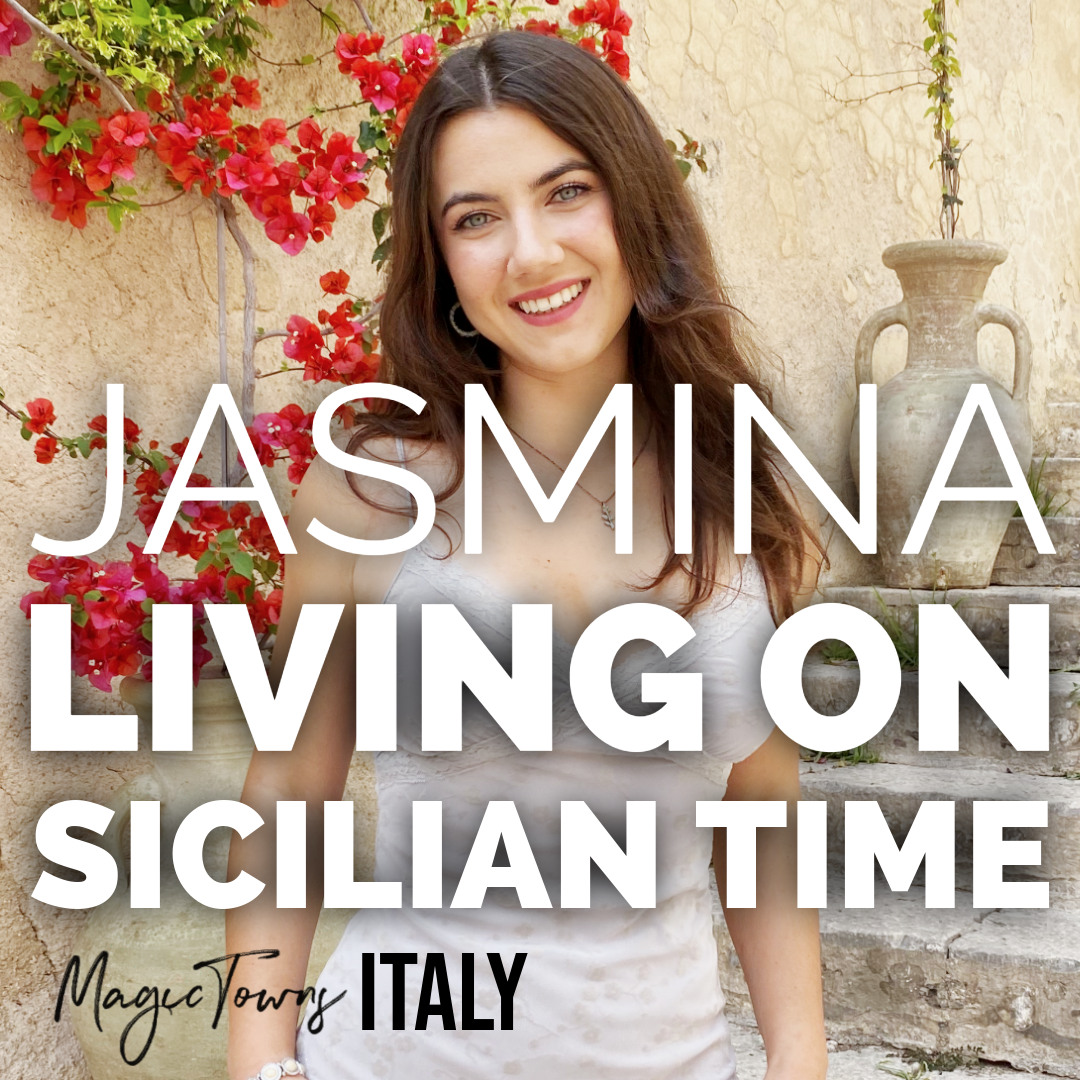
At 24, Jasmina Wanders left the UK for Italy with no guarantees and a beginner's grasp of the language. First Mantova for a master's...