Episode Transcript
Luca: Good morning everyone, and welcome back to Magic Towns, Italy, the podcast where we explore Italy's hidden gems. And the unique stories of people that are living in Italy. I'm Luca and I'm here with my co-host Anna.
Anna: Ciao Luca, hi everyone. Today we're gonna talk about a really interesting topic. The one euro houses in Italy. Specifically about Mussomeli, a small town in Sicily. It has become very popular because of these euro house scheme.
Luca: Mussomeli is a hilltop town of of about 10,000 people. And back in 2017, it grabbed the world's attention with the headline, get a house in Sicily for just one euro. An idea that everyone has heard about by now. And, we have, discussed it in detail, haven't we, Anna?
Anna: Some people think that it seems too good to be true, [00:01:00] but of course with these kind of houses, you have to fix up an old building that might be falling apart and there are rules that you must follow. So some people are just excited. Others are asking like, how much will this really cost me
Luca: There are lots of comments going around like, it is a scam. You're gonna spend a fortune fixing it up. And while some people, and we have covered this in detail in the past, have gotten stung by the experience you spoke to George Laing. And he feels exactly the opposite, right?
Anna: Yeah, exactly. But generally speaking, Mussomeli is a great example. The town offered about 500 empty homes for one euro, and almost all of them have been bought in the past few years.
Luca: One question about the program is whether, of course, anyone can, come and spend the money buy the house, then fix it if they have the pockets and the time to do so. But is Mussomeli really thriving or is it just hype?
Anna: Most people wonder [00:02:00] if the town has enough amenities to live year round. This community is attracting lots of new commerce, but also locals that live there for years.
Luca: And it's encouraging to hear this, tight-knit community. I'm a bit surprised about the location because, Mussomeli is literally in the center of Sicily a region, which has not the best road or the best rail, connections. We can cover this later.
Anna: There's a huge international community now, when you go to local cafes, it's like full with expats chatting and, you know, having a coffee. Australians, Americans lots of people from around the world. It's something that you wouldn't imagine. So the town's economy is getting a boost.
Luca: Going back to the one euro houses, do you have any feedback, from people you spoke to about how much the one euro houses actually end up costing?
Anna: The one euro is obviously symbolic. It means the house is handed to you almost free, but you have to [00:03:00] cover certain fees and then all the renovation costs. So from George experience, he did a renovation by himself. The house actually costed like 4,000 in total. With the agency fee, the notary, the energy performance certificate
Of course the renovation costs can vary a lot. Some houses need tens of thousands of euros of work, new roofs, fixing walls, plumbing. So it could cost 50,000, less, 20,000. It really depends on the condition.
Luca: So one euro house, uh, ends up being before you can actually live in 30 to 50,000 euro, let's say.
Anna: Yeah, exactly.
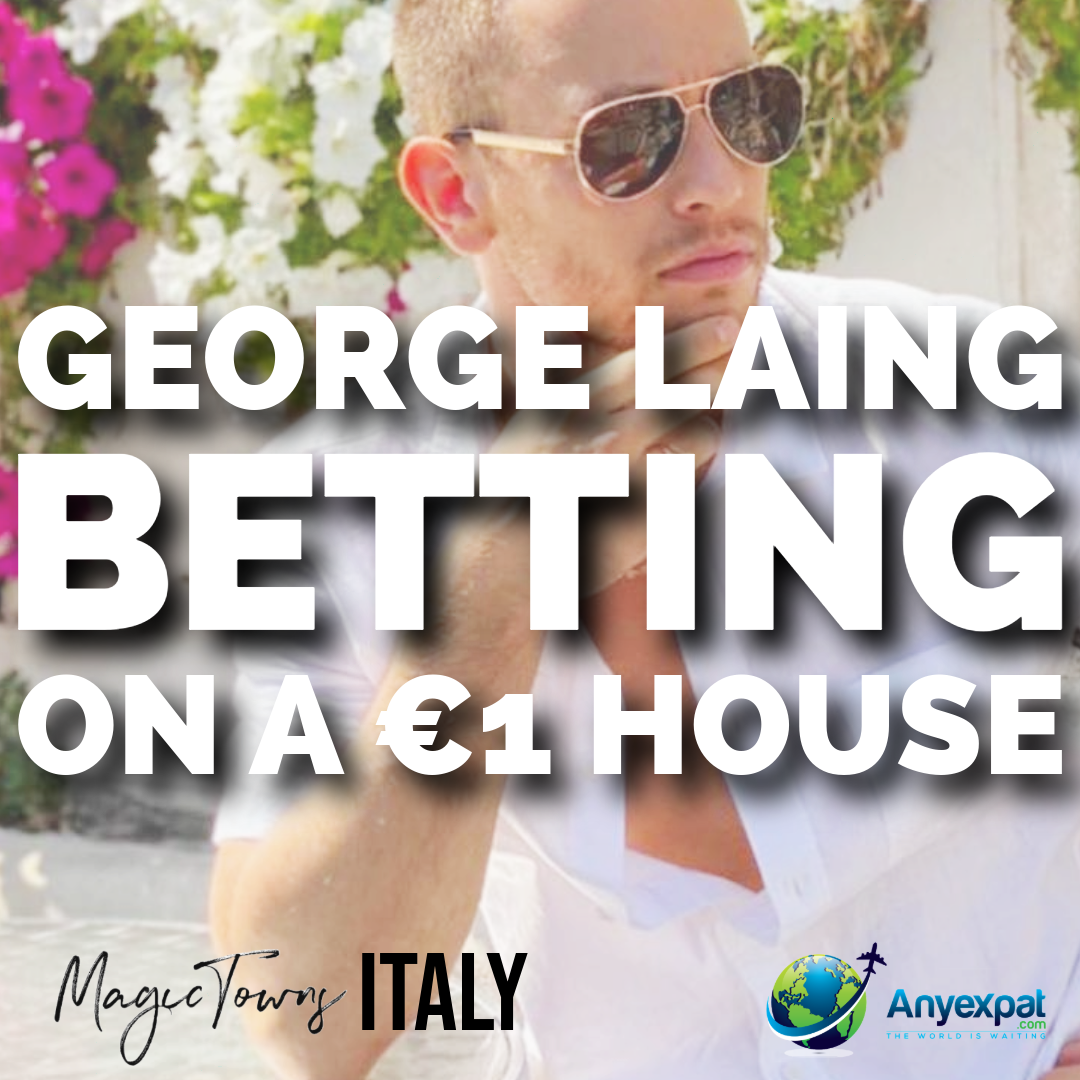
Luca: Going back to your interview with George Laing, this British expat that you interviewed. Talk to us a little bit about him before we hear it from his own voice.
Anna: George's story is really fascinating. He's from London and around 2020 during the COVID period, his life was like, kind of hit rock [00:04:00] bottom. So he lost his job, his relationship ended, and he even ended up living in a storage unit for a while because he couldn't afford London rent.
Luca: That was a bit of a drastic change for him.
Anna: George started searching for a solution. Not just moving to a cheaper city, the UK, but real escape. So that's when he discovered about this opportunity in Italy. He sent requests to 30, 40 different towns across Italy, that were advertising these one euro homes. A few towns still had availability and one of them was Mussomeli.
Luca: So he just jumped in, bought a house, and decided to fix it himself.
Anna: Exactly. And he didn't have any background at all in construction. He literally learned everything from watching YouTube tutorials.
Luca: That sounds more like a Robinson Crusoe than Under The Tuscan Sun, and he really roughed it. I can't imagine a lot of people doing this.
Anna: He said that [00:05:00] it's not obviously a glamorous life, but the long-term benefits are huge. He never wanted to pay rent again, and he achieved that. Now he owns his home and he's free and happy
Luca: and several more homes as I understand. It sounds like George has turned his, uh, initial foray into one euro homes into a bit of a business, hasn't he?
Anna: He started to share his journey on Instagram and went from zero online presence to over 200,000 followers in under a year. He's going to be featured on one of the UK's major TV channels in a property show. Good stuff for him.
Luca: Good for him. He's a bit of a minor celebrity right now and possibly become a big celebrity. So you interviewed George and we have a segment of that conversation.
Let's listen to it.
George Laing: About three years ago. I was living in London. I had a job. And in the space of about, you know, one month I got fired from my job during COVID, me and my girlfriend [00:06:00] broke up, and then I had to move outta my flat. And I was living in a storage unit for months trying to work out what to do, where to go, and almost just out of desperation, I was sick of, I was living in a flat in London, which has cost me about 1400 pound a month.
And I was only making a couple grand a month. Every month you're just living in red. And eventually it got to the point where I had nothing left for me to sort of keep me in London. And I had about 4,000 pound in my bank account. And so I started searching, where in the world can I buy a house for four grand and not have to pay rent again?
And it was between Bulgaria where you can pick up houses for sort of three or four grand or the one euro house scheme. And I messaged, you know, maybe 30 or 40 of the masipple around Italy. Half them got back to me and then half of those who got back to me said the houses are sold. And then a few of those who got back to me, um, said there isn't many left. And the sort of, the only place really, which seemed to have any substantial one of your houses left was Mussomeli. Within a few days of being there, I bought a [00:07:00] house. And it was just out of just basically just sick of living in London, sick of working for someone else. And I decided I'm never gonna work for someone else again.
I'm never gonna pay rent again. And fast forward a couple years, I've now got two houses in Mussomeli, and, um, I now make, uh, probably about three or four times what I did working in London 40 hours a week just by posting videos on social media.
And I've helped a bunch of people move to Mussomeli as well.
So I've done a bit of consultancy work, helping people move there. I've helped a bunch of people buy houses remotely this year as well. And in the next few months I'm gonna be opening up an antique store in Mussomeli as well and start selling antiques out there. And I'm already looking at my buying my third one euro house.
Anna: And like what expectation did you have at the beginning? Like how did they change once you actually owned the property?
George Laing: Well, you know, online, first of all, everyone said to me, don't do it.
It's a scam. It's too good to be true. Which, they see that's not the case now. The few friends I did had, and my [00:08:00] family, they all said, it is gonna be too much money to restore it. It is gonna take too long, blah, blah, blah. So I just ignored everyone. It seems online, the people who have the loudest opinions are the ones who've never been to Mussomeli or who know nothing about it. And my experience since I bought the house had been nothing, but, you know, easy, really. There was one rule. When you buy the house, you have to renovate the outside in the front within three years. But now because they've nearly sold all the houses and Mussomeli is thriving, they've now scrapped the, that rule. So now you can take, 30 years to renovate the house if you want. And they've introduced a new rule. A lot of the people who bought houses said. We really want a garden. So now you can get fast track planning permission and instead of putting a new roof on your house, you can turn your roof into a roof terrace and pilot and have sort of a garden on top of your house instead.
So all in one Euro house, costly, about 4,000 Euros. And apart from that, there's no other additional costs apart from the renovation costs.
I've sat down with the mayor a few times. He's very nice. They spent tens of millions of pounds renovating the area. And the only [00:09:00] trap that some people do get caught in, which I've seen firsthand is, you know, I do all the work myself purely out of just, I don't have the finances to pay someone. The only time I have seen people have issues of buying a house or a premium house, or abandoned house is when they subcontract a local contractor. And you know, they pay them 50,000 pound up front and maybe they only do 30,000 pound worth of work. And then before they finish the work, they've either left or they're demanding more money.
And I've seen that a few times in many cities around Italy. The one thing I say people to avoid is don't pay people up front, for your renovation and beware of who you are, who you are using, make sure they've got insurance, their company, they're not just some sort of local cowboy.
Anna: You said that it's still worth it for the money that you're paying
George Laing: I mean, the first house I bought all in, it cost me say, 4,000 euros. I've spent probably about 2000 euros renovating it. I'll get it finished for another 5,000 euros. So maybe all in all the costs and renovations and all that sort of stuff, you know, I'm not spending [00:10:00] more than maybe 12 to 15,000 euros. And that house will be worth at least 60,000 once it's done.
Anna: That's crazy.
George Laing: But you know, a lot of people can't do what I'm doing. I'm out there seven days a week. I, I was there for 35 days just now. I just got back yesterday. And I'm working 10, 12 hours shifts a day. Oh my God. Just sing it away. You know, working for myself, I just replaced the entire roof myself.
Which I did myself for about 500 euros, I got quoted 10 grand to replace the roof. So if you're willing to slog it out and you're physically capable. And it's very physically exhausting. And I think the average person can't climb on top of a roof or, you know, carry 50 kilogram bags of cement. It's a big workout and it's physically very intensive, which I, why I think a lot of people aren't able to do it.
If you're in good shape and you know you've got time, there's a lot of money to be made.
Anna: You said that you learned like doing it
George Laing: I have zero experience construction. The most construction experience I have is when I was 12 years old, I built my parents front garden wall. And it was the best wall on the street actually. It's still there. But apart from that, I've always loved watching like renovation shows [00:11:00] when I was younger . I was watching all these shows for so long, I just sort of subconsciously remembered certain things to do.
In the renovation, it's just common sense. Once you've got the right materials and you've watched someone online do it, you're only an idiot if you make the same mistake twice and it's not like I'm building a rocket ship going to Mars a lot of the time.
I think people assume construction or building is really difficult and there's like, there's such an anxiety to get the work done, but it's just like a big, it's like a big project. You're back at school. I'm back at school doing art and art class and it's just, you know, a big art project.
Anna: That's a good attitude. What have been like the biggest challenge so far?
George Laing: The two biggest challenges is one, finances. I'm constantly having to raise money. I work for myself and you know, money. So easier spending money than making money. So I'm always having to sort of make money even though I haven't spent a lot, you know, I still gotta, you know, I, I, when I've been out there now I can afford to rent an apartment. I'm rent an apartment which cost me, you know, 600 euros a month whilst I'm renovating for the first 12 months. When I was out there, the most difficult thing was I was living in the renovation. I had no [00:12:00] water and no electric for a year. So I wasn't showering for two weeks. I was having to go to the toilet and bottles and like wash my face in restaurants and you know, it wasn't a glamorous life, but I couldn't afford to spend 50 euros a night at a hotel.
And so initially the hardest part was just like back in the UK I have two baths a day and I'm in there for an hour every time, just like on my phone working. I've always been, very hygienic. So getting used to not having a shower for two weeks wasn't very nice, but I knew in the long term it was the only way to get it done.
And then secondly, the language. I don't speak a word of Italian, and I've tried to learn, but it seems the more I learn, the less I know. I just don't understand, you know, I can learn something and then people talk to me and there's so many different Sicilian dialects. Um, I just don't understand at all what people are saying.
So I just use Google translator, which is extremely lazy, but, you know, gets the job done. And apart from that, the only other thing I would say is it's a very lonely journey. But I love being by myself. Sometimes people get it misconstrued because it's a lonely journey.
But I can be by myself and not talk to anyone for months and end, I'm quite [00:13:00] happy. But I know some people struggle with their own thoughts and their own, their own space. So, you know, you've gotta get used to being alone and you know, especially when you're in a culture where, you know, people don't speak the same language as you.
Anna: And was it easy to find like English professionals there?
George Laing: There's a handful of people who moved there who have the sort of relevant traits and skills. There's an abundance of local traders and just, I guess just Google translator goes a long way. But I haven't used anyone for anything. No one's done any, I've done all the work myself, so I haven't really gone that pro through that process of speaking to contractors because I haven't needed them.
Anna: Yeah, I was thinking of the notary, all those things.
George Laing: I mean, if I'm being completely honest, when I was signing the, the, the documents, I had no idea what I was signing. I was just like, I hoping for the best.
Anna: Is there a big expat community
George Laing: A lot of the time I was purposely avoiding people. And it gave the perception that the town was a ghost town. But when you walk around, like I was there in the summer, there was a Brazilian funk night and there was at least 3000 people in the town square to like two in the morning. And you've got like 90-year-old women like, and like 5-year-old kids running around, [00:14:00] which is nice to see.
I've helped people move there from Australia, New Zealand, America, Ireland. There's an abundance of people who are sick of the country they live in, you know, they either they put their children through private schools and now they're retiring and they've got nothing left and they're still renting. But there's a lot of people who maybe they've got 30, 40, 50,000 pounds in savings, they wanna spend half of that on a place and use the other half to live and start again.
It's amazing the amount of, there's hundreds and hundreds of people there now who are expats. And when they listed the 500 houses, one euro houses back in 2017, they've now sold them all. They've basically all gone now. It's amazing really.
Anna: And most of them, like are living there full time
George Laing: Most of them live there full time. Um, a lot of them have some sort of like the retirement visa. Um, you know, due to the whole Brexit situation, I can only stay there 90 every 180 days, but I'm in the middle of trying to sort out digital nomad visa. But a lot of them, they live there full time. Um, and they just sort of far about enjoying the nice quiet life.
Anna: And what about you?
George Laing: So for the last three years, I [00:15:00] spent two weeks in Mussomeli and I spent two weeks in the UK. And I've been doing that on rotation for the last 36 months now. But it's getting to the point now where, you know, I, I wanna acquire, another dozen properties in the next year or two.
You have two options ever since Brexit. I can't say there more than half a year. So either I have to enroll as a student at the local college and commit to four hours, five days a week for two years.
And you know, my attendance at university was 20% and I dropped after first year. So I've never been very good at school. So the only other option is getting a digital nomad visa and you just have to prove you make more than two and a half thousand euros per month, which I do. And then every year they can renew your Visa for you.
And that's the only way around it really.
Anna: It's probably the easiest, way to, to get visa.
George Laing: There's just not many options anymore really. But you know, a lot of people struggle to work remotely, it's not easy. And I was posting on social media for at least 16 months before I started getting paid for it.
You know, a lot of people give up before you start getting paid.
Anna: You've built a community in a year. [00:16:00] That's great.
George Laing: 12 months ago I had no followers on Facebook. I've got quarter a million now. Mm-hmm. And it's growing, you know, it's growing by like 5,000 people in the last two days, so I'll probably hit a million in the next three or four months.
Anna: Yeah.
George Laing: Um, which we'll pay for more houses, which is nice. Absolutely.
Anna: Lots of people are dreaming about their like dream life watching you
George Laing: the thing is as well, a lot of people assume to live your dream life, you, um, have to have a lot of money. But the thing is a lot of people aren't willing to put themselves through what I put myself through. Absolutely. Not showering for a long time, living in an abandoned house, you know. It's, uh, it's not a glamorous life, but you know, the long term benefits are huge.
Anna: What advice would you give to someone who wants to move to Italy in a euro home?
George Laing: I would say get on the next available flight and go look at houses and just, you know, just get out there. You know, I think a lot of people spend too much time thinking and not enough time actually doing., I get hundreds and hundreds of messages saying to people, message me, oh, you're living my dream. I wish I was doing what you are doing. And [00:17:00] I'm just thinking, you know, if you saw my bank balance and you compared it to yours even now, or when I started two years ago, you've probably got way more money than I've ever had.
A lot of people, it's not financial. There a lot of people, they're their own worst enemy, you know, they overthink, they focus on the problems, not the solutions. I say get the house and then worry about it later? And it's not like in the UK where you know you're getting a mortgage for 40 years and you're getting a one bedroom flat for half a million, or a three bedroom house for a million, and you've gotta like do everything above board and all the, you know, get all the permits.
These houses are so cheap you can just get on with the work and do it yourself. It doesn't matter if it's perfect, it doesn't matters. You own the house, the property prices are going up and you don't have to do everything at once. You can take your time. But the most amazing thing I I, I've experienced since I moved there is the abundance of opportunities once you are there.
I've made more money doing so many random things once I'm there. And there's not many places in the world where, you know, you go to the local cafe and the, the mayor's sitting there. And the mayor's always commented on my Facebook and [00:18:00] he's always sharing my posts and you are and he's the guy who signs everything off.
Anna: And what about those people who think that it's a simple, quick opportunity?
George Laing: It's easier than you think it is.
You know, the market in the UK is saturated. I just don't see the point anymore of getting a mortgage and being tied into debt your entire life. The beautiful thing about what I've done is I cannot earn money for the next six months, and I don't owe anyone a penny and no one's coming after me.
The hardest thing for most people is leaving their nine to five and working for themself and leaving their comfort. The average person's extremely comfortable and we're creatures of comfort and people don't like change or they're scared of change, or they're just comfortable in the life they live. You'll never progress in life if you sort of stay stagnant. So sometimes you've gotta move backwards to move forward.
Anna: You need that mental flexibility. Some people say that these places are a bit isolated.
George Laing: Mussomeli is right in the center of the island, and maybe two years ago it was quite isolated. I used to walk from the local train station. It took me [00:19:00] two and a half hours to walk up, four miles up a hill. Huge incline and it's exhausting. But now since so many people have moved there, there's now direct buses from Palermo to Mussomeli. There's now, um, a mini bus which runs 16 times a day from the train station to Mussomeli.
So what was once inaccessible location? They've now listened to people and they've now bought transports. Small mini buses, so people can get to the local, to the train station whenever they want, and they can get a direct bus.
Anna: That was really interesting.
George Laing: Happy to share. And, um, another amazing thing really is, you know, you walk around in Elli, they've got, so I think it's, they've got like 20 million euros in funding from the government. They've, every single road in Mussomeli in the last two months has now been ripped up.
There's brand new roads everywhere. As I was leaving, they've now just put in a new outdoor gym in the town center, they've just put a new kid's playground. They're redeveloping every single section of Mussomeli. The town has had millions of pounds flooded into [00:20:00] it. It's all thanks to the mayor. And he's, um, he's completely changed the city and it's turning into, um, a thriving place. And what's happened now is a lot of the locals who lived there originally, and they moved out. Them and their children are coming back and everyone's moving back to Mussomeli, who originally left years ago.
So it's, um. It's a good time to move there. And the house prices haven't moved up yet, but the one thing I have noticed that has changed is the local B&Bs I used to stay in two years ago that were 40 euros a night, they're now 80 euros a night, and they're, they've been fully booked all year. So there's definitely the demand and at some point, and then at 12 months, the prices is gonna start going up as well.
Anna: You are revitalizing like a old city has been dead for years.
George Laing: Yeah. And it's a lot of fun, you know, and I, even though what I'm doing is work, never feels like I'm working.
I love what I do every day I wake up and I enjoy it.
Luca: Okay. Anna, that was great to hear. Thanks to you and George for having that conversation. He really makes it sound very easy or almost easy, doesn't he? He has a ton of determination and [00:21:00] at the same time, I think the average expat will probably struggle and, you know, if a person wants to do the renovation themselves or they should really discuss that with an architect, ahead of time because that are definitely things you're not allowed to do. So listeners, you know, remember to get a little bit of advice before climbing on the roof and decide to rebuild it from scratch, but still it's an exceptional journey, isn't it, Anna?
Anna: Absolutely. I mean, it's not for everyone. It takes commitment but you know, as we've seen with George, if you put the effort, it can pay off in ways you might not even imagine. George likes to say that sometimes you have to move backward to move forward in life, meaning he kind of stepped back from his comfort zone, so. Of course not everyone will do it, and that's okay. You can hire help, take this slower, spend a bit more money, but still achieve the, you know, the goal of having your own little Italian home.
Luca: [00:22:00] Absolutely. Take a step back and then find your future somewhere else. To wrap it up as we like to do, we'd like to encourage everyone who is interested in this to check out Anna's articles on Magic Towns Italy. And, don't forget if you do decide to check out Mussomeli or, uh, any other of the several thousand towns that we cover to use the Town Explorer, which can really help you with this.
Anna: If you want to share your story, and have an interview with us, we will be happy to have a chat with you.
Luca: Yes, we love your stories. Get in touch with us. You know where to find us. Facebook, Instagram, our website, and, get in touch.
Anna: We really hope George's story gave you some insight into how it all works. The good, the challenging, the rewarding.
Luca: Happy weekend everyone. Talk to you next week.
Anna: Bye.